



In the America of our childhood, churches were sacred ground—sanctuaries of refuge, worship, community, and peace. They were the one place where the noise of the world fell silent and reverence took its rightful place. These were the last places anyone thought safety plans and emergency drills would be needed. Today these sacred walls are threatened, not in theory, but in cold and documented reality. The data reveals an uncomfortable truth: houses of worship are being attacked more frequently, more violently, and with deadly intent.
Over the past 25 years, nearly 380 violent incidents at religious institutions have caused nearly 490 deaths and hundreds of injuries. These attacks have not been limited to problem neighborhoods or areas with high crime. They have erupted during quiet Sunday services, both in rural chapels and suburban parishes. Evil has emerged where grandmothers pray, where children sing, and where families gather in faith.
These are not abstract statistics. They are real people, real churches and real communities – forever scarred. A pair of recent tragedies are a stark reminder of how vulnerable places of worship have become.
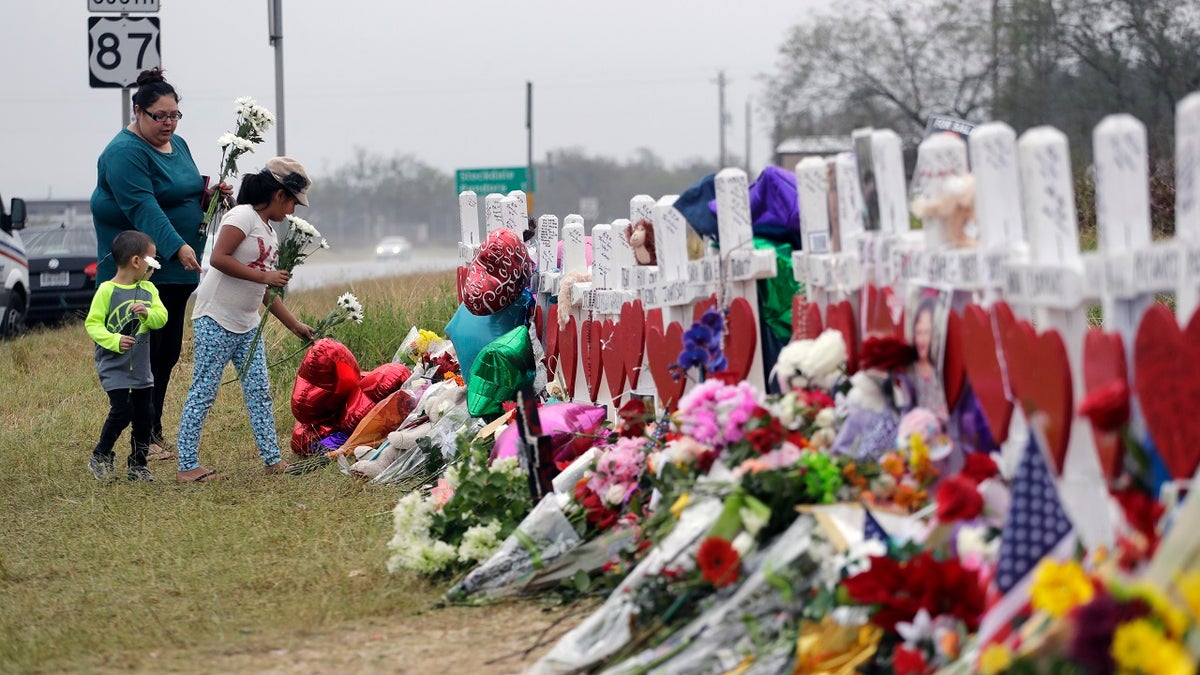
The deadliest attack on a U.S. house of worship in the past decade occurred in November 2017, at the First Baptist Church in Sutherland Springs, Texas. A gunman opened fire during Sunday services, killing 26 people and wounding 22 others.
FAITH, FREEDOM AND THE FIGHT AGAINST INCREASING ANTISEMITISM
Christina Osborn and her children Alexander Osborn and Bella Araiza visit a makeshift memorial for the victims of the Sutherland Springs Baptist Church shooting on November 12, 2017 in Sutherland Springs, Texas. (AP/Eric Gay)
A year later, in October 2018, worshipers at the Tree of Life congregation in Pittsburgh, Pennsylvania, were targeted again simply because of their faith. Eleven people were killed as they gathered for prayer and fellowship.
More recently, in August 2025, violence at Annunciation Catholic Church and School in Minneapolis invaded a place dedicated to children and learning. A gunman attacked the church school community, killing two young students and wounding 21 others.
Just weeks later, in September 2025, worshipers at the chapel of the Church of Jesus Christ of Latter-day Saints in Grand Blanc Township, Michigan, were again targeted in a shocking attack. An attacker crashed a vehicle into the church building during Sunday services, set it on fire and opened fire on congregants. The attack left four dead and eight injured, turning a peaceful morning of worship into chaos and sadness.
PASTORS WARNING OF ‘HILLING EFFECT’ AFTER ANTI-ICE STIRERS STORM MINNESOTA CHURCH SERVICE
These are just a few examples out of hundreds. They illustrate a painful reality: no denomination, no region and no community is immune.
The pattern is impossible to ignore. Acts of violence against places of worship have occurred in more than thirty states, crossing ecclesiastical and geographic boundaries. No church is too quiet, too modest or too far off the cultural radar to be considered untouchable.
Violence in churches may be less common than other crimes, but frequency is not the issue. The result is. When violence enters a house of worship, the damage is catastrophic and deeply personal. These are not anonymous buildings. They are sacred spaces filled with families, children and the elderly who reasonably believe they are safe.
Gunfire, Arson, and Vandalism: Tracking Political Violence in America
An attack on a church is not just a crime. It’s an attack on the idea that sacred ground still exists in America.
This trend did not emerge in a vacuum. It reflects a broader cultural decline – a society increasingly indifferent and sometimes openly hostile to faith and tradition. In too many corners of society, disrespect for the sacred ultimately becomes permission for the profane. Words create a climate, and a climate ultimately leads to action.
The deadliest attack on a U.S. house of worship in the past decade occurred in November 2017, at the First Baptist Church in Sutherland Springs, Texas. A gunman opened fire during Sunday services, killing 26 people and wounding 22 others.
The conclusion is inevitable. The reassuring mantra that “it can’t happen here” has become indefensible. Churches need protection, not just prayers and platitudes, but practical, responsible security measures that recognize the world as it is and not as it used to be.
This is not a call for fear. This is a call for clarity. Recognizing that evil exists is not paranoia; it’s common sense. And when evil strikes, it doesn’t target hard targets. It focuses on the most vulnerable: families in church pews, children in Sunday school and believers bowing in prayer.
CLICK HERE FOR MORE FOX NEWS ADVICE
Churches must be proactive guardians of their flocks, not passive observers of risk. This is greater than a psalm or a sermon. This is about the soul of America.
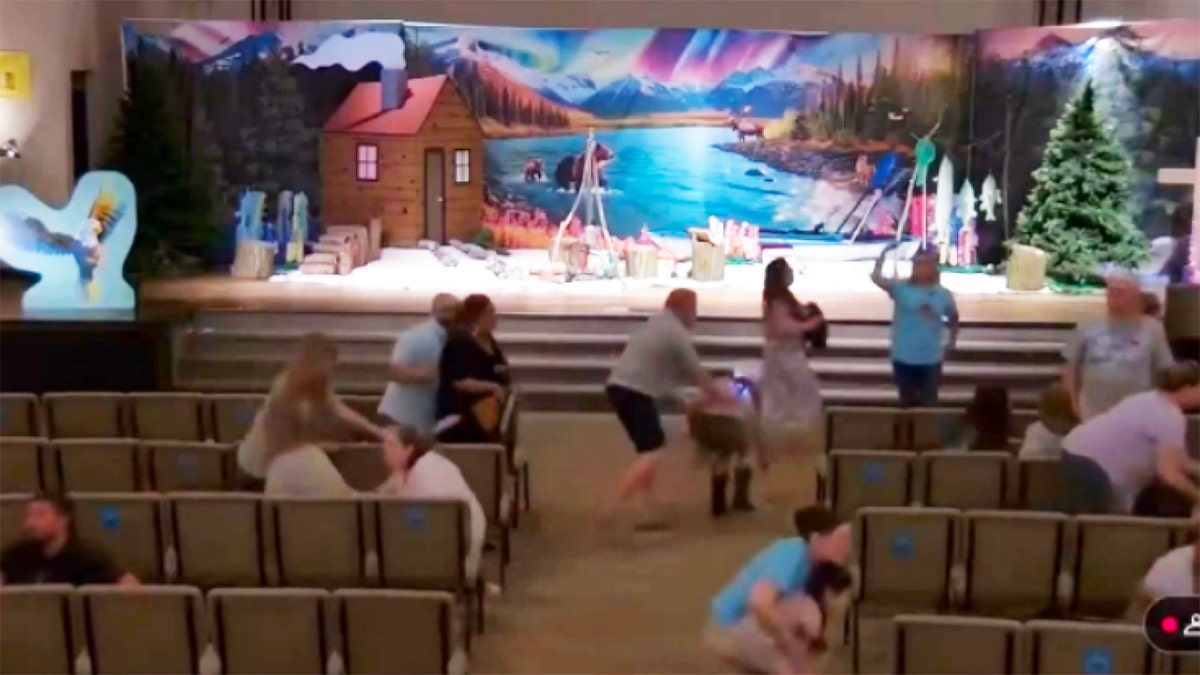
Churchgoers run out of the sanctuary during an attack on CrossPointe Community Church in Wayne, Michigan, on Sunday, June 22, 2025. (Metro Detroit Crime News)
Just as schools train for modern threats, churches must implement layered security, build trained security teams, collaborate with law enforcement agencies and practice emergency response. Security must be as deliberate as the sermon and as disciplined as the choir. Preparation is stewardship.
CLICK HERE TO DOWNLOAD THE FOX NEWS APP
When the places where we pray, teach our children, and sing our hymns are under siege, the question is no longer about the safety of the church, but about the character of a nation that still claims to cherish freedom.
This is our moment to wake up, think clearly and act courageously. Not just to protect churches, but to protect the idea that Americans can worship openly and without fear. That idea is not optional. It’s fundamental.
Erin Mersino is vice president and head of Supreme Court and Appellate Litigation for Advocates for Faith & Freedom.
