



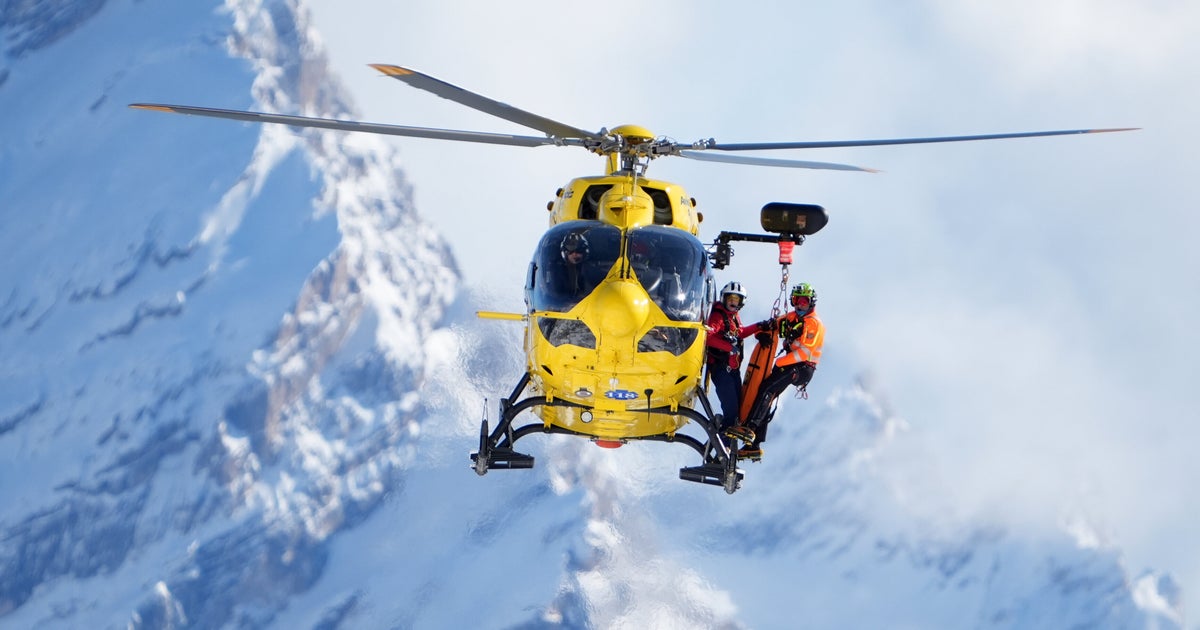
The options include using another, larger helicopter to take the athlete to a hospital trauma unit, taking the athlete by ambulance to a medical facility in Cortina, or releasing the athlete. In Bormio, where men’s skiing is contested at the Olympics, Andrea Borromini, an intensive care doctor and chief of medical service for the Stelvio course, said helicopter crews there can fly to three different medical facilities.
In Vonn’s case, she was taken further south to a hospital in Treviso.
“We often hear on TV that it is a very serious injury because the helicopter came. But that is not always true. It is just an evacuation system,” said Andrea Apollonio, who is responsible for the medical services at the Cortina races.
Chemmy Alcott, a retired British downhiller turned BBC broadcaster, said she does not remember being picked up by a helicopter when she suffered compound fractures of the tibia and fibula in her right leg in a 2010 crash near Lake Louise, Alberta.
“Luckily I had been given some morphine at that point. So I started to lose my head a little bit – to stop the screaming,” Alcott said. “I only remember it because I saw it in the video.”
However, Alcott can still identify with the thought process skiers go through when they realize they’ve lost control.
“You get this crazy slow-motion focus,” she said. “So you’re thinking about your organs. You’re thinking, ‘Okay, how am I going to protect my neck and my back?’ You say, ‘Okay, this is how I’m going to fall.’ And then you have a huge amount of adrenaline, so you never feel any pain for the first 30 seconds. And then it hits you and you do a kind of body scan from top to bottom, and then you know things are bad.
The helicopter crew emergency physicians know that dealing with athletes immediately after they are injured is nothing like what they deal with in their day-to-day work.
“They always want to get up right away. So we have to immobilize them and then re-examine them,” said Lydia Rauch, an anesthesiologist who has been on the helicopter crew for years at races in Val Gardena and Cortina. “I’ve treated athletes with severely broken bones who told me nothing hurt them. And there may be other internal injuries that you don’t notice right away.”
The sound of the helicopter blades can be disturbing to the next skier waiting to take off and already dealing with a long delay due to the crash.
Austrian racer Mirjam Puchner was the unlucky skier in that position before Vonn’s crash on Sunday. Because Vonn only fell a few fences during her flight, the helicopter was virtually at eye level in front of Puchner.
“All the time you hear that, it gets on your nerves,” said Puchner, who was disappointed with her eleventh place.
She said she has no memory of her own helicopter evacuation when she broke her right leg in a fall during the descent at the 2017 world championships in St. Moritz, Switzerland.
“I woke up in the hospital,” she said.
