



While U.S.-Iranian diplomacy remains primarily focused on Tehran’s nuclear program, Israeli officials and analysts warn that ballistic missiles remain a central red line for Jerusalem and could shape any decision on unilateral action.
Before leaving for Washington, Prime Minister Benjamin Netanyahu said he plans to push Israel’s priorities in the talks. “I will present to the president our positions on the principles of the negotiations – the important principles – and in my opinion they are important not only for Israel, but for everyone in the world who wants peace and security in the Middle East.”
These priorities, Israeli officials say, extend beyond the nuclear file to include Iran’s missile capabilities. Israeli defense officials recently warned US counterparts that Iran’s ballistic missile program poses an existential threat to Israel and that Jerusalem is prepared to act alone if necessary, according to reporting by The Jerusalem Post.
‘ISRAEL IS JUST THE STARTERS’: HUCKABEE WARNS THREAT TO IRAN AS NETANYAHU EYES TRUMP TALKS
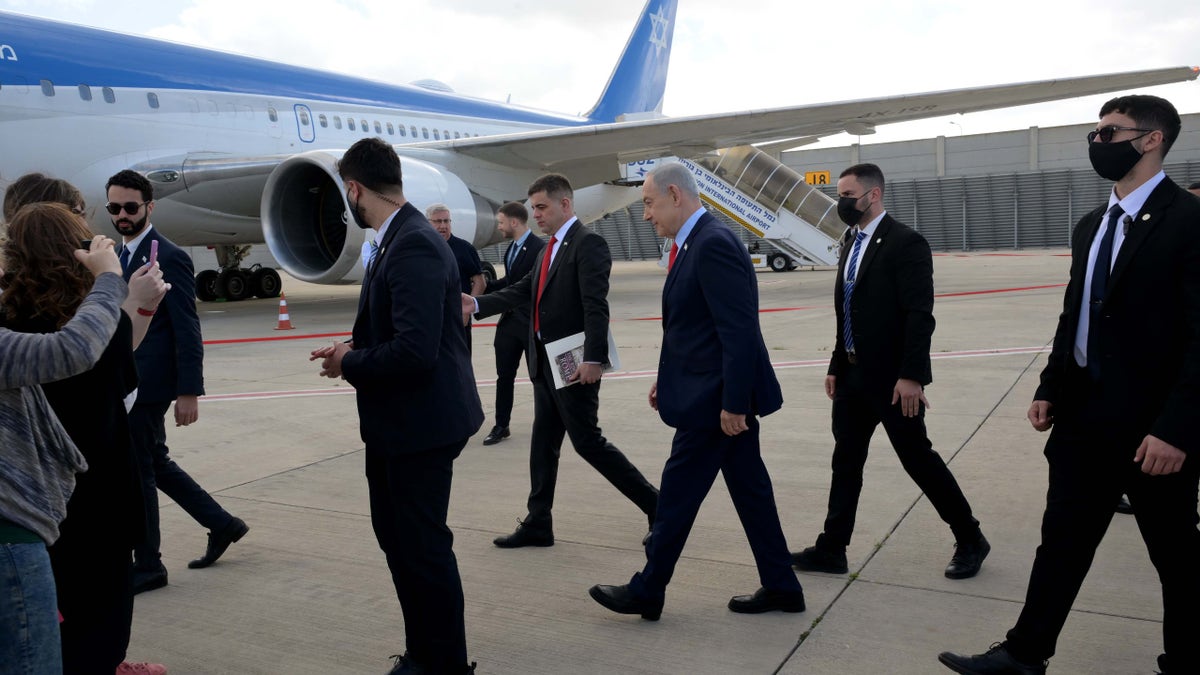
Israeli Prime Minister Benjamin Netanyahu boards his plane to Washington, DC, ahead of a meeting with President Trump. February 10, 2025. (Avi Ohayon/Government Press Agency)
The newspaper reported that Israeli security officials in recent weeks have signaled their intention to dismantle Iran’s missile capabilities and production infrastructure through a series of high-level exchanges with Washington. Military planners outlined possible operational concepts aimed at downgrading the program, including attacks on key production and development sites.
A spokesperson for Israel’s defense minister declined to comment on the matter.
IRAN is reportedly developing chemical, biological warheads as protests spread across its collapsing economy
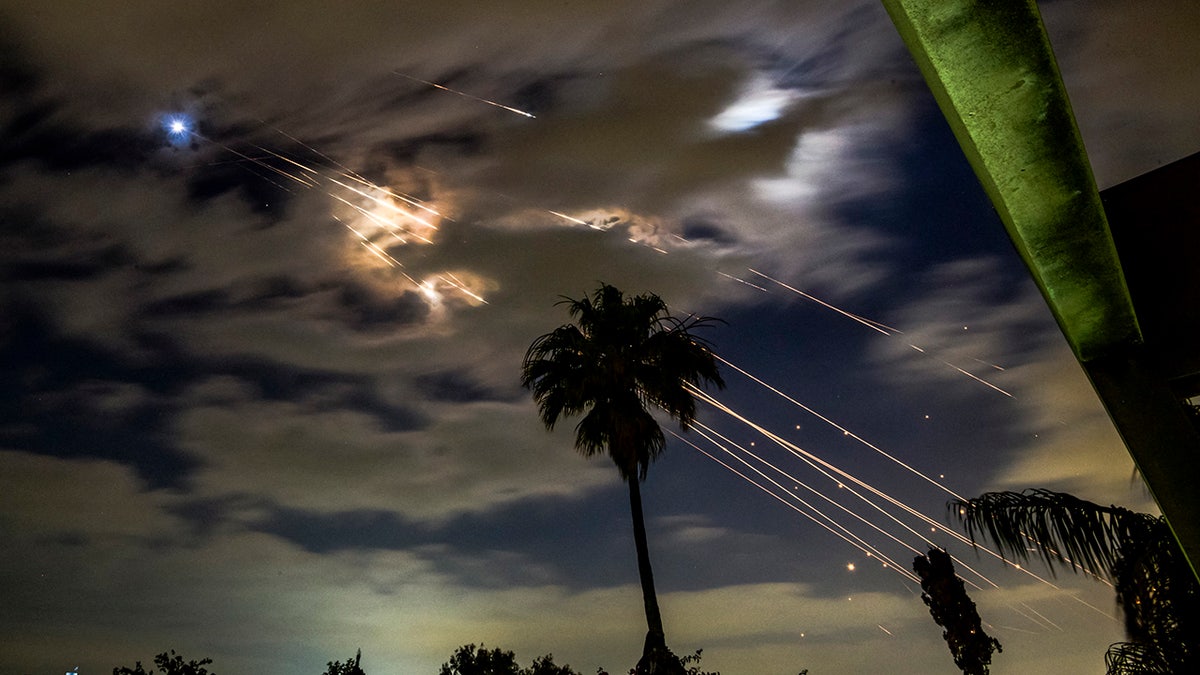
Israeli air defenses target Iranian missiles in the skies over Tel Aviv, June 16, 2025. (Matan Golan/Middle East Images/AFP via Getty Images)
“If the negotiations focus only on the nuclear issue and ignore the missiles, Israel will remain exposed,” Shine said. “Iran views its ballistic missile program as its main deterrent and will not give it up.” She emphasized that Tehran views them as a defensive and deterrent capability dictated by the supreme leader. Iranian Foreign Minister Abbas Araghchi said his country would not negotiate over its ballistic missile program, rejecting a key US demand and further worsening prospects for a breakthrough deal. Shine described that position as a fundamental red line for Israel.
She also warned that Tehran could delay diplomatically in assessing whether Washington will limit talks to nuclear restrictions only.
“They have room to show flexibility on enrichment,” she said, noting that activity slowed after attacks on facilities, “but missiles are different. They wouldn’t talk about that.”
Israeli concerns extend beyond the negotiating table. A former intelligence official familiar with strategic planning said Israel retains the ability to strike independently if necessary.
TRUMP WARNS IRAN, SLOWS STRIKES AS RED LINE DEBATE REFLECTS OBAMA’S SYRIA MOMENT
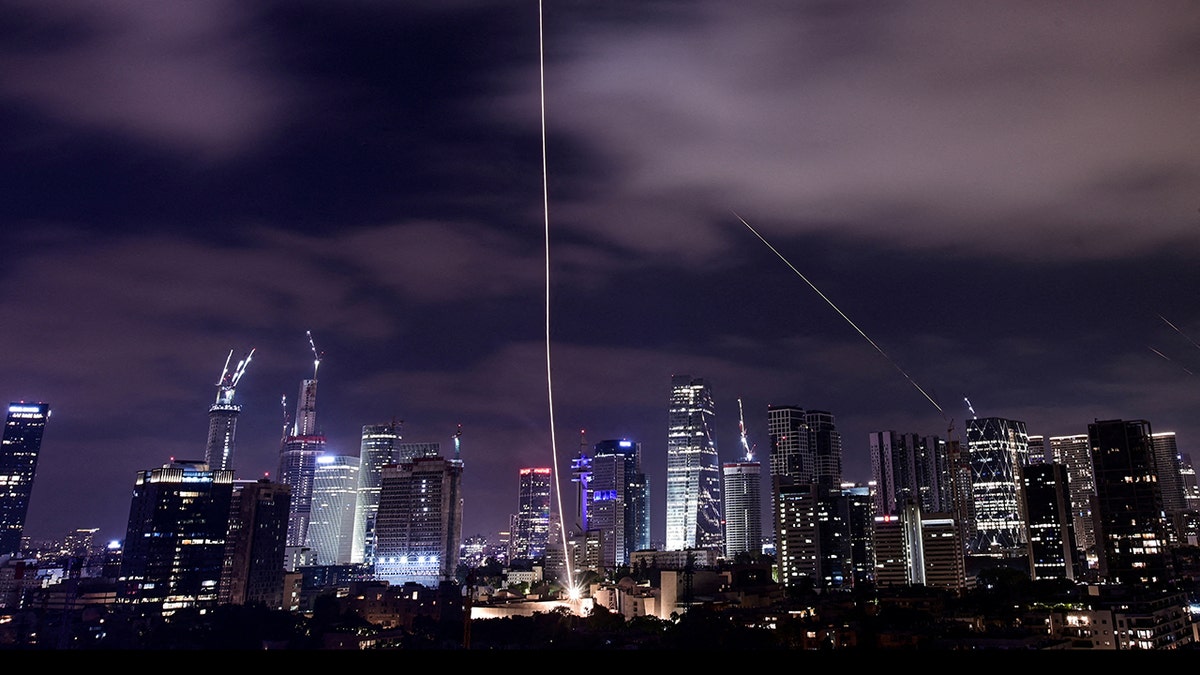
Missiles launched from Iran are intercepted over Tel Aviv, Israel, June 15, 2025. (Tomer Neuberg/Reuters)
“Israel can act on its own if there is no choice,” the former official said, adding that the expansion of missiles and regional threats would be key triggers.
Shine says the optics of Israeli pressure on Washington could complicate matters.
“If missiles become the central public question, Israel may appear to be pushing the US toward military action,” she said. “If that doesn’t work, Israel can be blamed.”
CLICK HERE TO DOWNLOAD THE FOX NEWS APP

Omani Foreign Minister Badr al-Busaidi, Special Envoy Steve Witkoff and Jared Kushner meet ahead of US-Iran talks in Muscat, the capital of Oman, on February 6, 2026. (Oman Ministry of Foreign Affairs/Anadolu via Getty Images)
She added that Iran’s missile arsenal is not aimed solely at Israel, but is part of a broader deterrence strategy against the United States and regional adversaries.
For Israel the implication is clear. A nuclear deal that leaves Iran’s missile infrastructure untouched could be seen in Jerusalem as stabilizing the regime while the most immediate threat remains. That calculation, Israeli analysts say, defines the red line.
