



America is in the midst of a housing crisis, and it’s no mystery why. House prices have risen well above wage growth, first-time buyers are being excluded from the market and young families are increasingly forced to rent indefinitely or leave expensive states altogether. This did not happen overnight, and is the predictable result of decades of policy choices that have made it increasingly difficult to build owner-occupied housing.
The data tells a clear story when viewed over time.
In 1950, the United States had 23.6 million owner-occupied homes. By 2000, that number had risen to about 70 million. That means an increase of about 196% over 50 years. During that same period, the U.S. population grew from about 151 million to about 281 million, an increase of about 86%. For half a century, America built owner-occupied homes at a rate more than twice the rate of population growth. Housing supply did not just keep up with demand. It remained well ahead.
That era is over.
THE CRUNCH OF CONSTRUCTION LABOR IS INCREASING COSTS AND DEEPENING AMERICA’S HOUSING AFFORDABILITY CRISIS
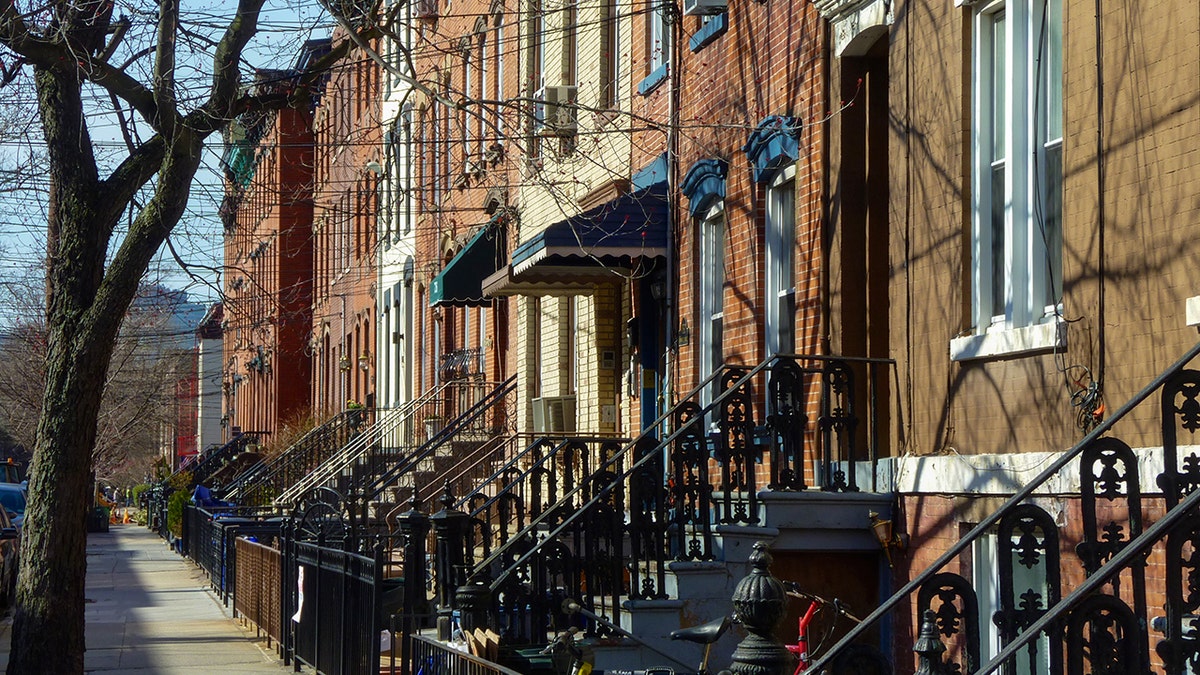
A row of houses in Hoboken, New Jersey, dates from an era when we built plenty of houses. (iStock)
At the end of the third quarter of 2025, the number of owner-occupied homes was approximately 86.92 million. That’s an increase of only about 24% since 2000. Over that same period, the U.S. population grew by about 22%. Housing growth and population growth are now moving almost in lockstep, a dramatic departure from the post-war model that allowed for broad homeownership.
This slowdown is crucial because population growth alone cannot meet housing demand. Family formation, immigration, the number of families buying a second home and changing family structures all increase pressure on supply. If construction only keeps pace with population growth, shortages become inevitable. If it falls behind, prices will skyrocket.
One of the biggest reasons America isn’t building enough owner-occupied homes is regulations. In many cities and popular suburban areas, building codes are hundreds of pages long, and the number of regulations can number in the thousands.
TRUMP’S 50-YEAR MORTGAGE INTRODUCES A NEW KIND OF DEBT
The enormous regulatory burden that homebuilders face makes it more difficult and expensive to build new homes. In 2021, an economic analysis from the National Association of Home Builders found that regulations add nearly $94,000 to the cost of building a new home. That burden is pricing millions of families out of the market before construction even begins.
Zoning restrictions, environmental reviews, permitting delays, and land use regulations combine to make construction slower, riskier, and much more expensive than necessary. These barriers overwhelmingly benefit entrenched interests and harm working families and start-ups.
Land use regulations have become particularly difficult. In many states, vast tracts of land are owned by the federal or state government. In other cases, the land is privately owned, but local regulators have prevented developers and families from building new homes. This has resulted in millions of homes being packed into relatively small areas.
California offers a stark example. About 90% of the state’s population lives on just 5.1% of its land area.
Because zoning and land use regulations are largely imposed by state and local governments, Washington cannot solve its housing crisis by executive order. But it is not powerless.
The enormous regulatory burden that homebuilders face makes it more difficult and expensive to build new homes.
President Donald Trump and Congress must use federal influence to force change. Federal dollars for education, infrastructure, transportation, and housing should be conditioned on measurable progress toward the expansion of owner-occupied housing. States that refuse to relax land use restrictions and reduce regulatory barriers should not receive unlimited federal subsidies.
This approach respects federalism while recognizing reality. The federal government should not establish zoning regulations, but it should also not fund policies that artificially limit housing supply and drive up costs across the country.
CLICK HERE FOR MORE FOX NEWS ADVICE
Throughout America’s history, home and land ownership have been essential to economic stability, family formation, and upward mobility. In previous generations, Americans built accordingly. Today, that commitment is undermined by regulatory systems that make new housing scarce by design.
Politicians from both parties have wrongly tried to solve these problems in recent years by calling for more subsidies or relief programs to make it easier for people to go deeper into debt to buy a home. But this is a terrible economy. When you increase the availability of money without reducing demand or increasing supply, you end up causing prices to rise rapidly, and that is exactly what happened.
CLICK HERE TO DOWNLOAD THE FOX NEWS APP
If we want to solve the housing crisis, states must be forced to change course. And for now, that pressure will have to come from Washington.
If the Trump administration and Congress want to solve the housing crisis, it’s time they tackle the states.
CLICK HERE TO JUSTIN HASKINS
