



As protests spread across Iran and security forces intensify their crackdown, former political prisoners warn that what is visible on the streets represents just a fraction of the violence happening behind prison walls.
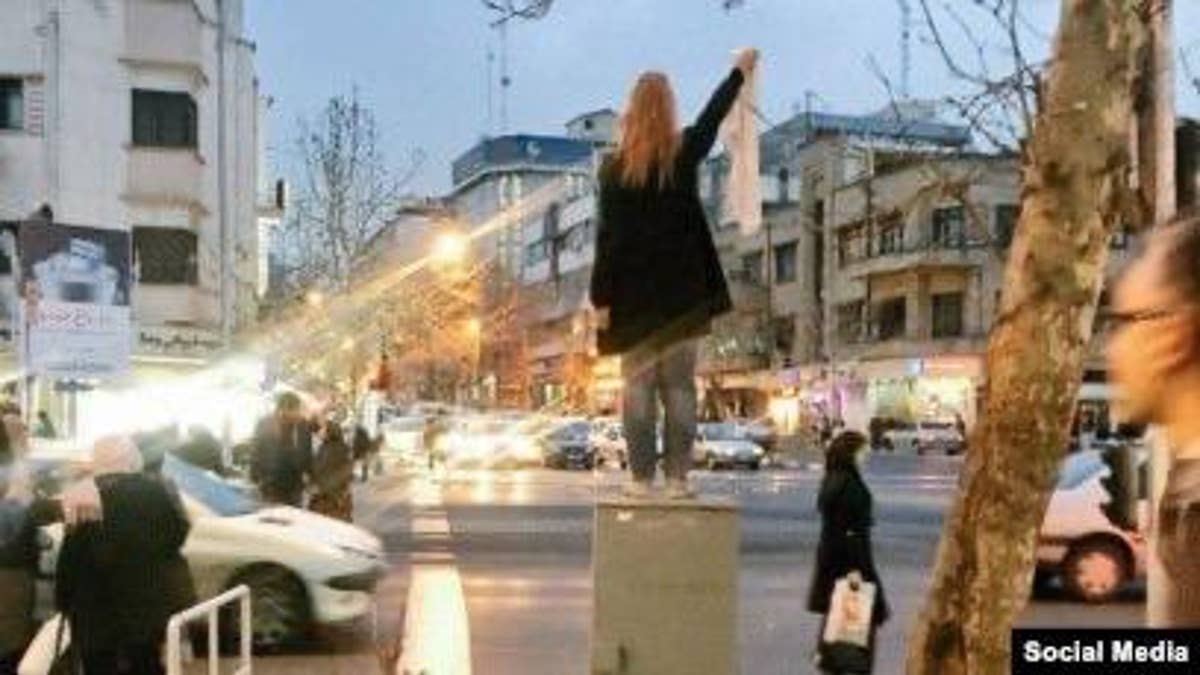
Maryam Shariatmadari, one of the faces of the ‘Girls of Revolution Street’ protests against Iran’s mandatory hijab laws, was sentenced to a year in prison in March 2018 for what authorities described as “encouraging corruption by removing her hijab.”
IRANIAN STUDENT SHOT IN THE HEAD FROM SHORT RANGE DURING PROTESTS, BODY BURIED BY THE ROAD
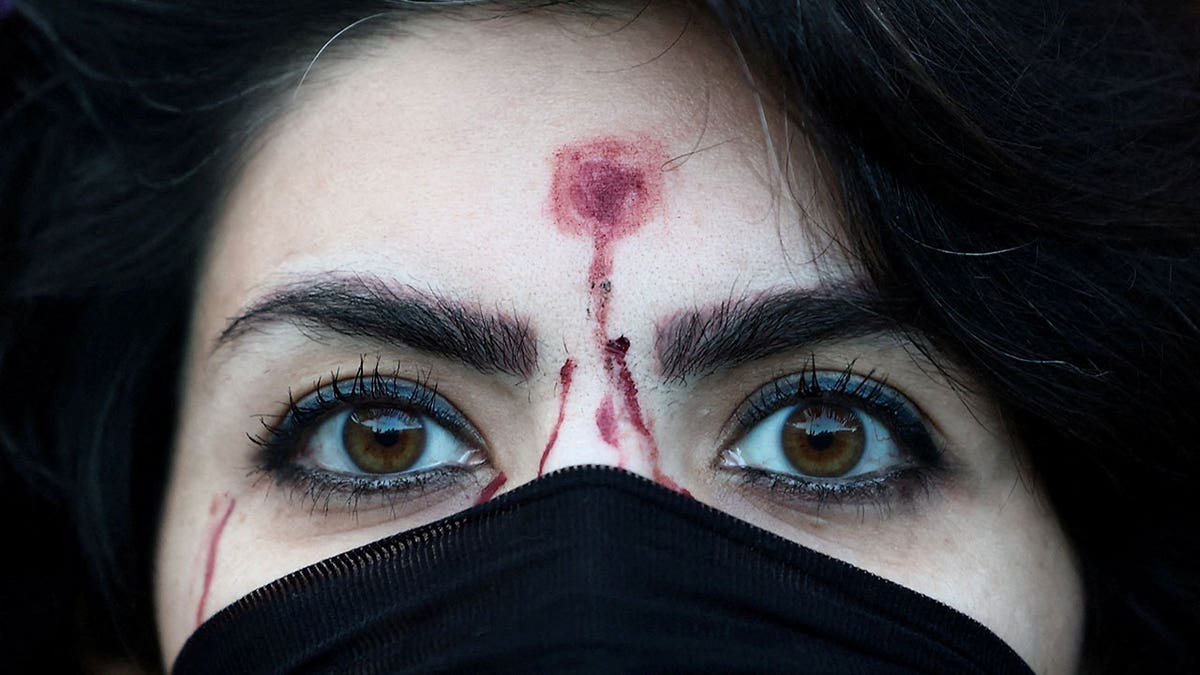
A woman with a mock-up of a gunshot wound on her forehead looks on during a rally in support of nationwide protests in Iran, in Rome, Italy, January 13, 2026. (Francesco Fotia/Reuters)
Shariatmadari said this week that the scale of the current protests has pushed the regime beyond its ability to detain demonstrators.
“According to the testimonies of eyewitnesses, the oppressive forces of the Islamic Republic are … delivering ‘last shots’ to wounded protesters and killing them on the spot,” she said. “This is unprecedented in the past 47 years and indicates that the number of prisoners has become so large that the Islamic Republic no longer has the capacity to hold them and is killing them without trial.”
She said that while prisoners from previous uprisings were transferred to prisons or unofficial “safe houses”, authorities had expanded detention during the 2022 “Woman, Life, Freedom” protests to include schools, ambulances and food transport vehicles.
“They used ambulances and food transport vehicles to detain protesters, which I think is unprecedented in human history,” Shariatmadari said.
PROTESTS IN IRAN RAISE REGIME SURVIVAL DEMAND AS EXILED DISSIDENT SAYS IT FEELS LIKE A ‘REVOLUTION’
She described systematic abuse in detention centers.
“This includes assault, transfer to prisons without segregation based on the type of crime, and deliberately inciting other prisoners to harass and abuse us,” she said.
One of her most traumatic experiences occurred during the interrogation.
“I was ordered to take off my clothes and remain completely naked for a body search while cameras were present,” Shariatmadari said. “I knew men were looking at me, and I could hear their voices.”
She also recalled being denied emergency medical care after an injury.
“Only after about 24 hours was I taken to a hospital to undergo surgery,” she said. “I believe this happened as a result of media pressure and public support.”
IRAN SWITCHES ‘KILL SWITCH’ TO HIDE ALLEGED CRIMES AS DEATH TOLL RISE FROM PROTESTS
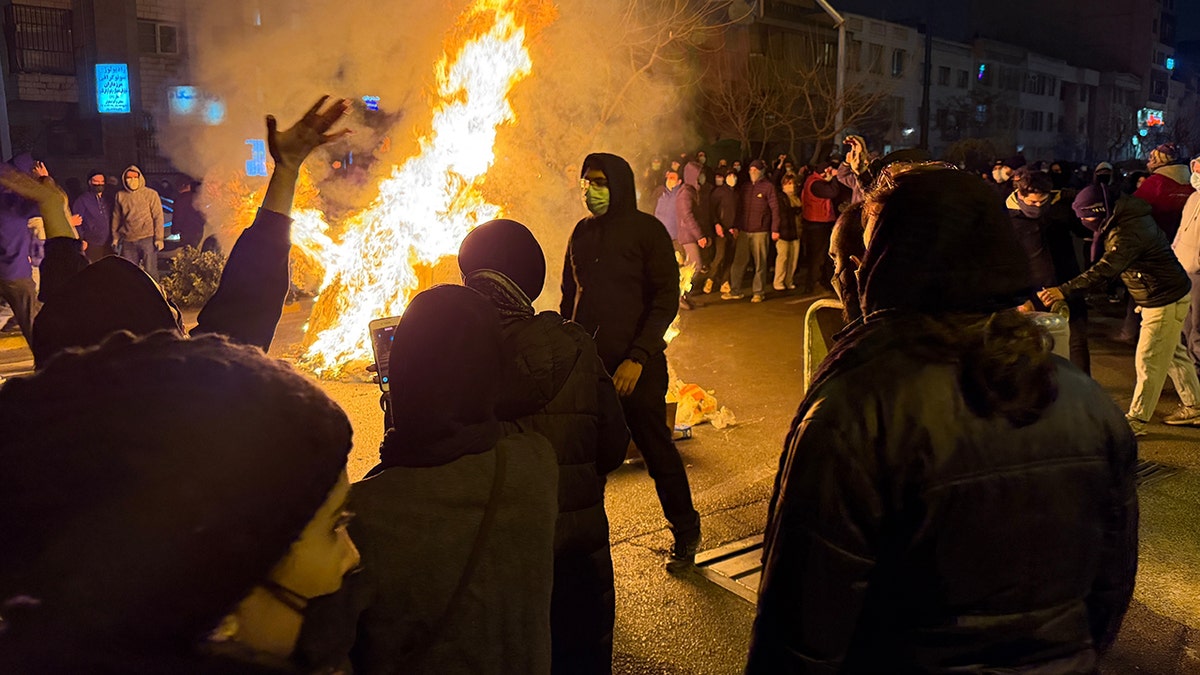
Iranians attend an anti-government protest in Tehran, Iran, on January 9, 2026. (UGC via AP)
Eight hours a day, blindfolded
Shariatmadari’s husband, Mehdi Ghadimi, a freelance journalist who worked with reformist newspapers Etemad and Shargh, was arrested during protests in January 2023 and taken to an undisclosed location. He spent almost his entire detention in solitary confinement.
“I was interrogated twice a day, morning and afternoon, for eight hours with my eyes blindfolded,” Ghadimi said.
In the last days of his detention, he was transferred to a shared cell, where he encountered prisoners from across Iranian society.
“I met students, workers, technical specialists and others arrested during the Woman, Life, Freedom movement,” he said.
According to Ghadimi, detainees accused of supporting the Pahlavi dynasty were beaten more severely.
“Because their slogans and symbols supported the Pahlavi dynasty, they were beaten much more often than the others,” he said.
Based on his experience, he warned that current detainees are likely to be treated even more harshly.
“I can only imagine that this time all detainees will face similar harsh treatment,” Ghadimi said, adding that the head of Iran’s judiciary has publicly signaled a hard line.
Ghadimi, who fled the country in 2024, also cited figures circulating among activists claiming to be well above the 2,600 reported numbers, likely dwarfed by that number. He said the number of detainees is likely much higher than the reported 10,000.
THE IRAN REGIME WILL RELEASE HEZBOLLAH AND IRAQI MILITIES AS THE UPRISING SPREADS
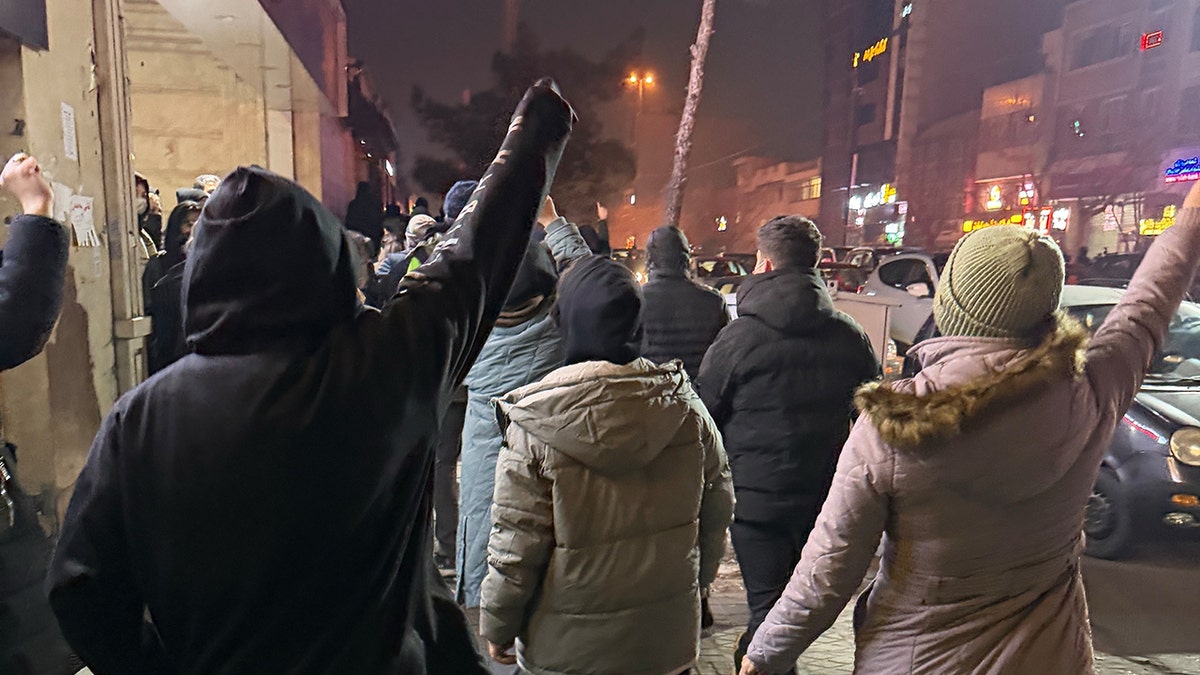
In this photo obtained by The Associated Press, demonstrators chant slogans during an anti-government protest in Tehran, Iran, Thursday, Jan. 8, 2026. (UGC via AP) (UGC via AP)
“On the other side of those bars is hell”
Shabnam Madadzadeh, who was imprisoned during the 2009 uprising, said watching the current protests has revived memories of extreme brutality and increased fears of mass executions.
“What immediately comes to mind is the sheer brutality of the regime in terms of torture and murder,” Madadzadeh said.
She said detention centers were already overcrowded during the 2009 protests.
“There was no more room for detainees. Even the solitary cells were overflowing with people,” she said.
Madadzadeh recalled that interrogators accused almost everyone arrested of ties to the Mujahedin-e Khalq, and described torture and abuse “to the point of murder.”
One threat made to her during interrogation still haunts her.
“He said to me, ‘If we are overthrown, we will kill you all. We will not leave anyone alive,'” she said.
She warned that the current internet outage has increased the danger to detainees.
“We really don’t know what level of brutality is currently taking place in prisons,” Madadzadeh said, adding that information reaching her indicates that the regime wants to carry out executions quickly.
Citing Iran’s past, she warned of the risk of mass killings similar to the executions of political prisoners in 1988.
“Today, at a time when the regime is on the brink of collapse, there is a real danger that such a massacre could repeat itself,” she said.
Madadzadeh said young detainees are likely to face forced confessions, mock executions and threats of sexual violence.
“No matter what I do to you, no one will hear your voice,” an interrogator once told her, she recalled.
She also highlighted the suffering of families searching for loved ones.
“Families move between detention centers, prisons, morgues and cemeteries,” she said. “This uncertainty in itself is the greatest form of torture.”
As the protests continue, all three former prisoners said the outside world should not look away.
IRANIAN REGIME TARGETS STARLINK USERS IN BID TO RESTRICT LEAK PROTEST IMAGES
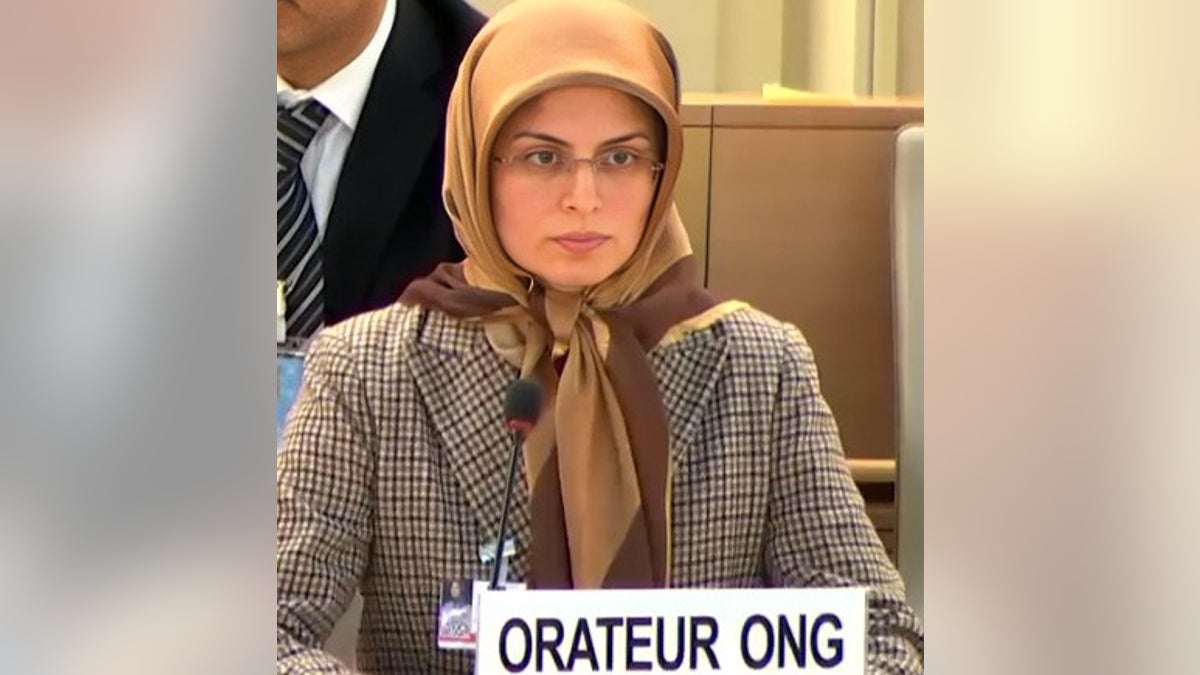
“The first thing I expect the free world to understand is the true voice of the people of Iran,” Shariatmadari said. “The people of Iran are united in their demand for regime change and want to restore Iran to its former dignity, a dignity in which human rights and human worth were respected.”
Ghadimi repeated that warning.
“If the regime shows such open violence on the streets, there is no doubt even worse atrocities are happening behind prison walls,” he said. “I can only imagine that all detainees will be treated in a similarly brutal manner this time.”
For Madadzadeh, the danger is immediate.
“The world must respond decisively to this atrocity,” she said. “Every minute of delay costs lives.”
She called for concrete international action.
CLICK HERE TO DOWNLOAD THE FOX NEWS APP
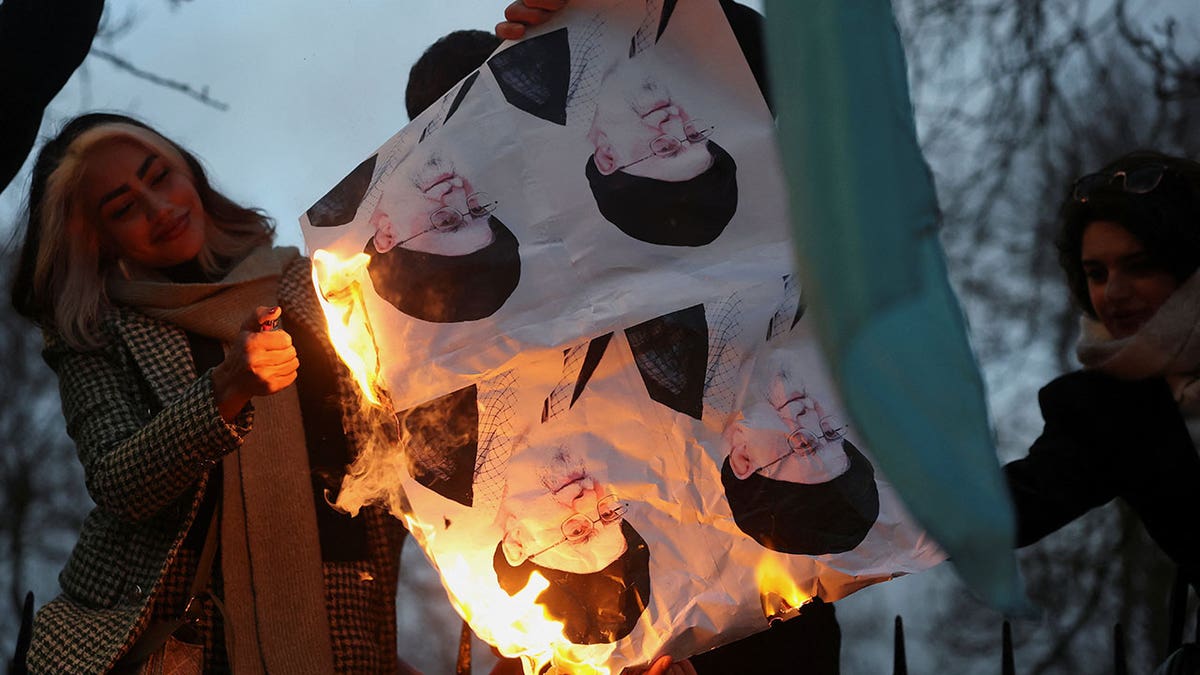
Protesters burn photos of Iranian Supreme Leader Ayatollah Ali Khamenei outside the Iranian embassy during a rally in support of nationwide protests in Iran, in London, January 12, 2026. (Toby Melville/Reuters)
“Force the regime to allow independent visits to prisons and to the secret detention centers of the IRGC and the Ministry of Intelligence,” Madadzadeh said. “Lives depend on it.”
Together, their testimonies paint a grim picture of Iran’s prisons as the hidden frontlines of repression and a warning that what remains unseen may be even deadlier than what is already visible on the streets.
