




Information indicates that the total number of U.S. citizens and residents held hostage by the Iranian regime could be greater than the open source records of five U.S. hostages in Iran.
The Iranian regime arrested American citizen Kamran Hekmati, a 70-year-old from Great Neck, New York, who went to Iran last May to visit relatives. Iranian authorities arrested Hekmati in July 2025 and accused him of “making a trip to Israel” 13 years prior to his visit to Iran. Hekmati, a Persian Jew born in Iran, traveled to Israel in 2012 to attend his son’s Bar Mitzvah.
IRAN REGIME ESCALATES REPRESSION TOWARD ‘NORTH KOREA STYLE MODEL OF ISOLATION AND CONTROL’
A view of the entrance to Evin Prison in Tehran, Iran, October 17, 2022. (Majid Asgaripour/WANA (West Asia News Agency) via Reuters)
Iran bans Iranians from traveling to the Jewish state and from having any relations with Israel. Tehran considers Hekmati an Iranian citizen because the regime does not recognize dual nationality.
The regime’s Islamic Revolutionary Court sentenced Hekmati to four years in prison. He is being held in Iran’s infamous Evin Prison – a complex reportedly used to torture political prisoners and dissidents. The Human Rights Activists News Agency (HRANA) noted that Hekmati has also been detained at an intelligence ministry facility in Tehran. CNN reported that Hekmati is suffering from bladder cancer.
The regime arrested another US citizen, Afarin Mohajer, at Imam Khomeini International Airport on September 29, 2025. Human rights group HRANA said there was no information about charges against the California resident.
According to US government broadcaster Radio Farda, which reports on Iran, Mohajer has an inoperable brain tumor and was told by “a doctor before she went to prison that she does not have long to live”, citing her son. She visited Iran to sort out her husband’s finances after his death, the son said. Although she was released on bail in December, she is not allowed to leave Iran.
TRUMP TARGETS Iranian DEATH FATWAS AS WATCH DOG GROUP DEMANDS IMMEDIATE SANCTIONS

This frame shot from a video released Friday, January 9, 2026, by Iranian state television shows a man holding a device to document burning vehicles during a night of mass protests in Zanjan, Iran. (Iranian state television via AP)
Authorities arrested an unnamed Iranian-American woman in December 2024. She was released from prison, but authorities confiscated the dual national’s passports and she was also banned from leaving Iran.
Former Radio Farda journalist Reza Valizadeh traveled to Iran in March 2024 to visit relatives, according to a report by United against a nuclear Iran (UANI) on American hostages in Iran.
US government broadcaster Voice of America, like Radio Farda, reports on Iran and said Valizadeh was reportedly arrested in September 2024 and charged with “collaboration with foreign-based Persian media.”
The charge was later changed to “collaborating with a hostile government.” UANI noted that “VOA cited sources claiming that Valizadeh was arrested for not cooperating with the IRGC intelligence organization and the Iranian Intelligence Ministry and for not expressing remorse for his journalism.”
The regime arrested Shahab Dalili, a permanent US resident living in Virginia, in 2016.
The UANI report stated that Taghato, a Farsi-language news channel run by Iranians living in the US, posted on Twitter (now X) that the Iranian regime arrested Dalili in March 2016. He went to Iran after his father’s death. The Iranian regime’s opaque legal system sentenced him to ten years in prison for ‘alleged cooperation with a hostile government’.
PROTESTS IN IRAN PRODUCE NEW TRUMP WARNING ON DEADLY GOVERNMENT LAW
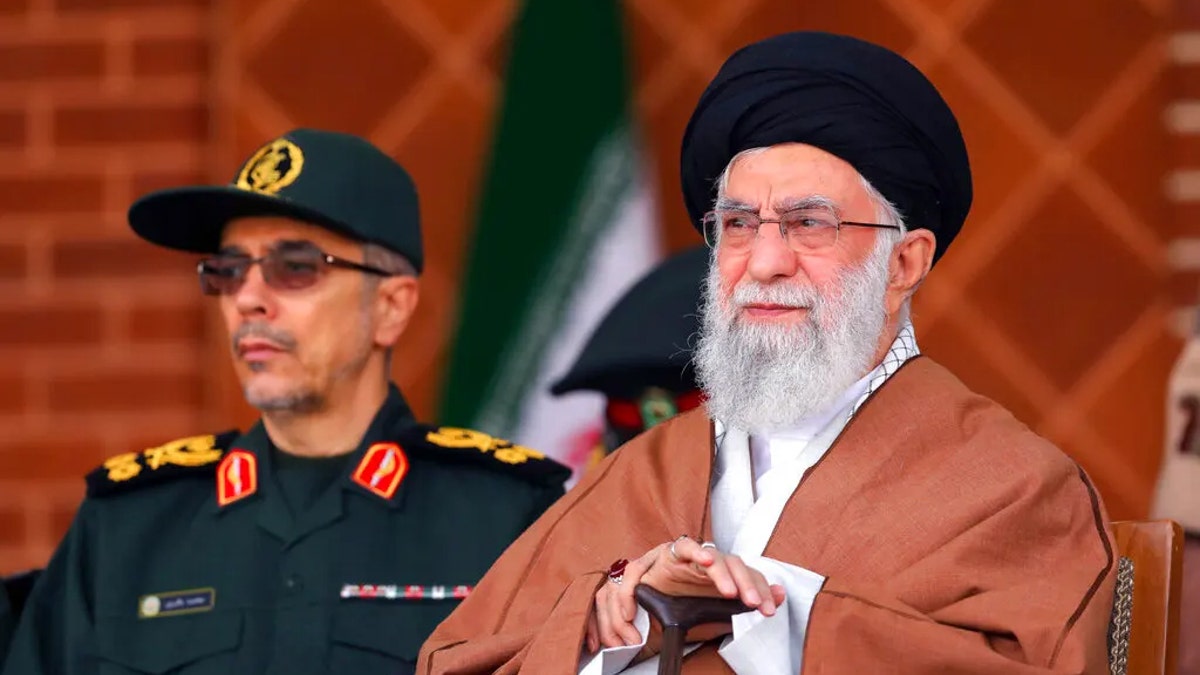
Iran’s Supreme Leader Ayatollah Ali Khamenei sits next to a senior military official in Iran. (Getty Images)
The US official added: “Due to security concerns related to ongoing cases, we are not disclosing specific numbers of hostages.”
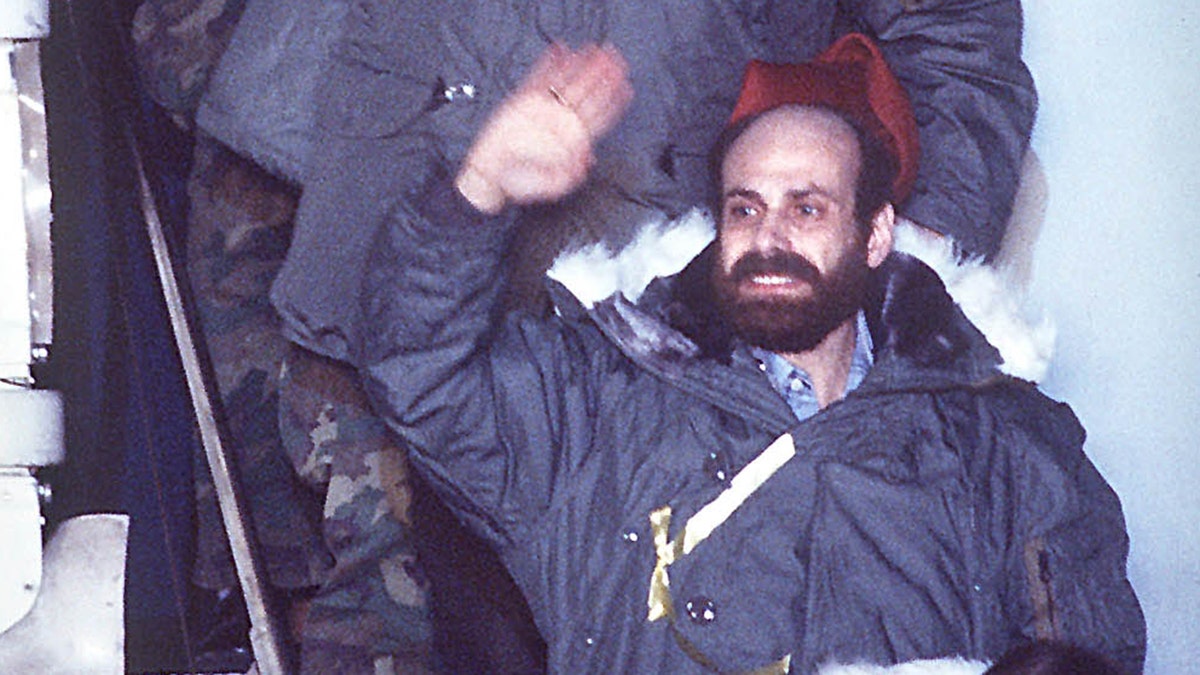
Barry Rosen, one of the hostages from Iran, waves as they step off the plane in Germany on January 1, 1981. The hostages were held captive for more than a year after the US embassy was stormed during the Iranian Revolution. (Tim Chapman/Getty Images)
The nationwide strikes and demonstrations to overthrow the regime regarding securing the hostage’s release “complicate things further,” Rosen said, adding that hostage diplomacy “has always been complicated.” Rosen was eventually released after spending 444 days in captivity.
“Quiet diplomacy is the best way to go, but I don’t think there is any way for quiet diplomacy at this point,” he said.
Discussing “quiet diplomacy,” Rosen said he was “talking about dealing with the Iran hostage situation, given all of our differences over the nuclear situation between the two countries. But when it comes to the uprising in Iran, we must loudly support a democratic Iran.”
Iran stands on brink as protesters move to take two cities, appeal to Trump
Rosen, who considers Iran his second home, said: “I want to see the Iranian people do what they are doing now so that the Iranian regime implodes on its own.” He said: “Support for uprisings (and protests) is the right way. I fear military operations that could cause chaos in the country.”
Rosen co-founded the non-governmental organization Hostage assistance worldwide, which provides up-to-date information on hostages held outside the US
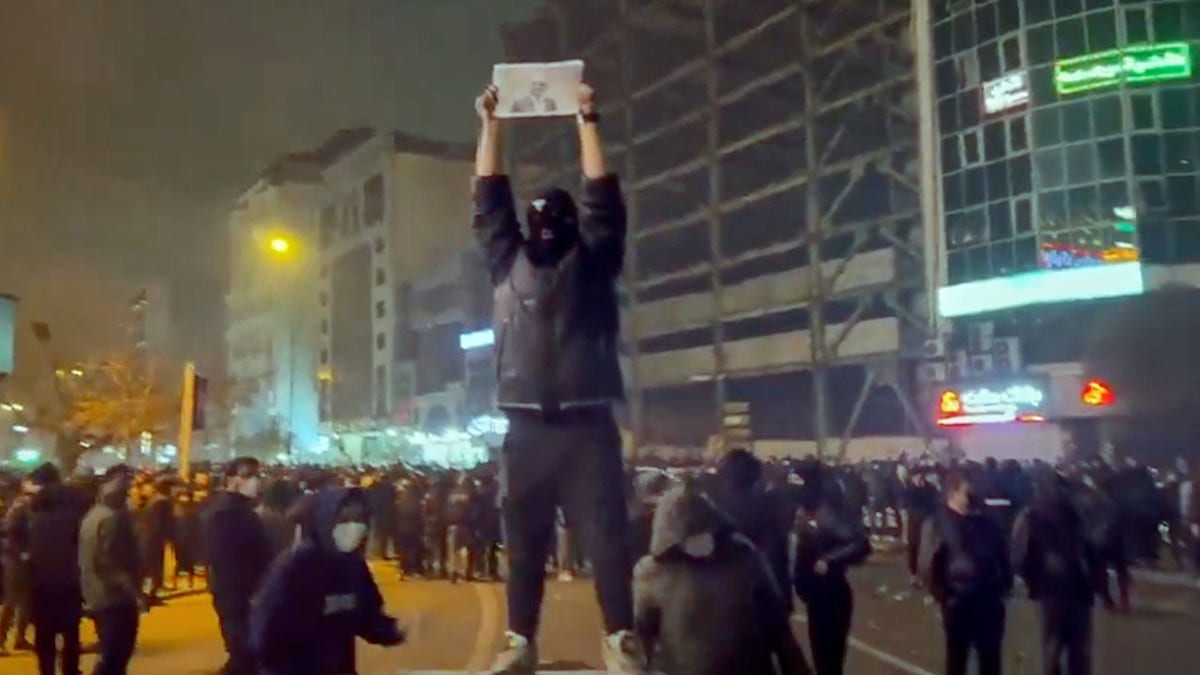
In this frame shot from a video obtained by the AP outside Iran, a masked protester holds a photo of Iranian Crown Prince Reza Pahlavi during a protest in Tehran, Iran, Friday, January 9, 2026. (UGC via AP)
Navid Mohebbi, who worked as a Persian media analyst for the Public Affairs Bureau of the US State Department, wrote a booklet on ‘Breaking the Trend: How to Combat the Hostage Taking Cases in Iran’ for the US-based National Union for Democracy in Iran.
CLICK HERE TO DOWNLOAD THE FOX NEWS APP
He continued: “To reverse this pattern, the United States must impose consequences that are measurable, cumulative, and irreversible. Any hostage case should carry automatic penalties: targeted sanctions against judges, prosecutors, interrogators, prison officials, and intelligence officials involved; permanent confiscation—not escrow—of regime assets related to hostage diplomacy; and coordinated diplomatic consequences with allies, including travel bans, removal of regime officials from international bodies, and pursuit of red flags Interpol notices, where appropriate. The message must be unequivocal: hostage taking will make the regime worse off, not better.”
Mohebbi urged that “the U.S. should formally designate Iran as a hostage-taking state, ban the use of U.S. passports for travel to or through Iran, and maintain a public record of regime officials involved in these crimes. At the same time, Washington should provide stronger, more transparent support to hostage families and address sustained public naming and shaming cases,” he said.
