



-
Trump’s ‘loyalty test’ for Southeast Asian countries
-
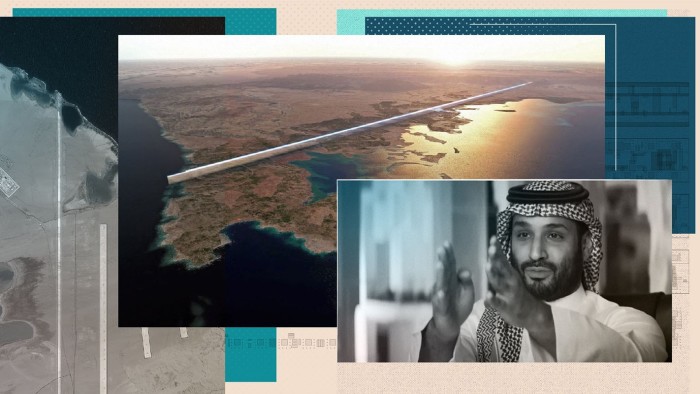
How Saudi Arabia’s Neom Dream Disintegrated
-
An interview with Argentine President Javier Milei
The Trump administration has added “poison pill” termination clauses to trade deals with Southeast Asian countries, creating a new diplomatic weapon in Washington’s strategic competition with China.
What you need to know: The clauses, embedded in two new agreements signed last week with Malaysia and Cambodia, threaten to terminate the agreements if either country signs a rival pact that endangers “essential U.S. interests” or “poses a material threat” to U.S. security. Trade experts say the highly unusual and sweeping clauses amount to a “loyalty test” for smaller countries that also have close trading ties with China.
Insights from analysts: “This is the US protecting its strong market access through these agreements to try to reshape the ‘factory Asia’ that has developed over the past decades,” said Simon Evenett, professor of geopolitics and strategy at the IMD business school in Lausanne, Switzerland. Maria Demertzis, head of the economic strategy center at the Conference Board think tank in Brussels, said the poison pills were “yet another nail in the coffin” of multilateralism. “Are [US President Donald] Trump says, ‘I’m the big man, you trade with me.’” Read more about the controversial trade deals.
Here’s what else we’re keeping an eye on today and this weekend:
-
Economic data: China reports foreign exchange reserves and trade data from October today – and monthly inflation figures on Sunday. The Philippines today publishes third quarter GDP.
-
Trump-Orbán talks: Hungarian Prime Minister Viktor Orbán will meet Donald Trump at the White House to request relief from US sanctions on Russian oil companies.
-
Japanese companies: Mitsubishi Heavy Industries, Honda and Mazda report results.
How closely did you follow the news this week? Take our quiz.
Five more top stories
1. China’s largest flying taxi company aims to launch airborne services from major airports within three years. EHang says its unmanned electric aircraft can transport passengers to major Chinese cities for as little as $30 – and expects the device to soon be deployed in a wider range of contexts.
-
Driverless cars: Two of China’s largest robotaxi startups fell as much as 15 percent yesterday after listing in Hong Kong, as analysts raised concerns about profitability.
2. Singaporean lender United Overseas Bank has set aside its largest ever loan provision of S$615 million (US$470 million) yesterday in anticipation of possible losses in the Hong Kong and US property markets. Southeast Asia’s third-largest bank by assets said it had identified “troublesome” areas in its commercial real estate lending in Hong Kong and the US and was acting “proactively”.
3. The White House will cut obesity drug prices for patients by hundreds of dollars after inking a groundbreaking deal with Eli Lilly and Novo Nordisk. The list price for shots from Novo’s Ozempic and Wegovy will drop from at least $1,000 per month to $350 when purchased through TrumpRx, the president’s new website expected to launch in early 2026.
-
Pharma news: The CEO of Novo Nordisk challenged Pfizer to increase its bid for obesity start-up Metsera, as the Denmark-based drugmaker again defeated its US rival’s bid for the biotech.
4. US stocks fell yesterday after weak private sector jobs data sparked a new bout of volatility on Wall Street. Stock markets have been hit by turbulence this week as investors grow nervous about the high valuations of AI-linked companies that have fueled this year’s rally.
5. China has issued dollar bonds at an interest rate equal to the interest rate on US government bonds, Bankers on the deal said it was the first time Beijing’s borrowing costs matched Washington’s. The bond offering is the latest example of countries taking advantage of the opportunity to issue international debt cheaply.
Visual examination
The Line was intended to be the centerpiece of Neom, the mega-project that Crown Prince Mohammed bin Salman hoped would redefine life in Saudi Arabia and beyond. But his dream of a utopian city in the desert is undone by the laws of the desert physics and finance.
We are also reading. . .
-
Javier Milei interview: Argentina’s president rejected investors’ calls to let the peso float freely and vowed to accelerate his free market reforms.
-
Japanese diplomacy: A shiny Ford pickup has become the symbol of new Prime Minister Sanae Takaichi’s diplomatic dance with the US, writes Leo Lewis.
-
Latin America’s oil dilemma: As the COP30 climate summit approaches, Brazil and Colombia offer competing visions for a climate summit “just energy transition” for developing countries.
Chart of the day
Pirates off the coast of Somalia have successfully boarded a commercial ship for the first time in 18 months, according to maritime authorities and shipping analysts. The attack raises fears of a return to hijackings on a trade route that had stabilized in recent years.

Take a break from the news. . .
From the Enlightenment to today’s ‘tradwomen’, three new books look at the tension between production and reproduction amid signs of a shift in women’s changing role in the global economy.

