



Buck Sexton, co-host of ‘The Clay Travis & Buck Sexton Show’, provides in-depth analysis on ‘Kudlow’ on China’s push for access to the US market and the potential shifts in Asia-Pacific trade relations.
The White House on Saturday unveiled details of a “historic” trade deal between President Donald Trump and Chinese President Xi Jinping — a sweeping deal aimed at easing tensions between the world’s two largest economies.
The agreement, which the government described as a “huge victory,” was finalized this week at a bilateral meeting in Busan, South Korea. It includes U.S. tariff cuts and a series of Chinese commitments on fentanyl, rare earth exports and agricultural trade, according to a White House press release.
The agreement “safeguards America’s economic strength and national security and puts American workers, farmers, and families first,” the White House said.
TRUMP SECURES CHINA AGREEMENT TO BUY MILLIONS OF TONS OF US SOYBEANS, BESSENT SAYS AFTER XI MEETING
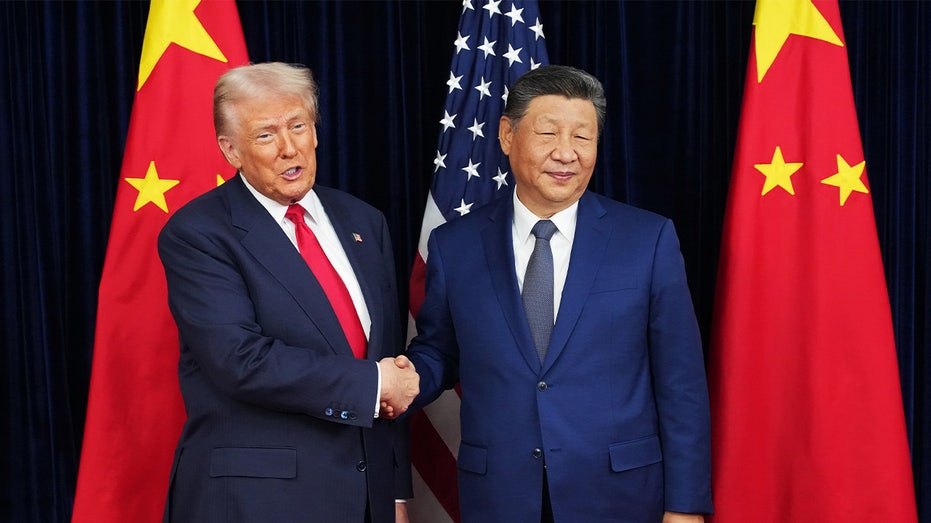
US President Donald Trump greets Chinese President Xi Jinping ahead of a bilateral meeting at Gimhae Air Base on October 30, 2025 in Busan, South Korea. (Andrew Harnik/Getty Images/Getty Images)
Under the agreement, China will curb the flow of fentanyl precursor chemicals into the U.S., suspend new export controls on rare earths and magnets, reopen its markets to U.S. soybeans and other agricultural products and lift retaliatory measures against major U.S. companies, the announcement said.
China specifically agreed to:
- Suspend new export controls on rare earths announced on October 9.
- Issue general permits for the export of rare earth elements, gallium, germanium, antimony and graphite.
- Take ‘significant action’ to curb the flow of fentanyl into America.
- Suspend all retaliatory tariffs imposed since March, including on U.S. agricultural products such as soybeans, pork, corn and dairy products.
- Eliminate non-tariff countermeasures targeting US industries.
- Purchase 12 million tons of U.S. soybeans by the end of the year and 25 million tons per year through 2028.
- Resume imports of American sorghum and hardwood logs.
- Resumes trading from Nexperia’s chip facilities in China.
- Lift sanctions imposed in retaliation for the US investigation into China’s maritime, logistics and shipbuilding sectors.
- End investigations into US semiconductor companies.
- Extend the market-based tariff exclusion process for U.S. imports through December 31, 2026.
TRUMP AND
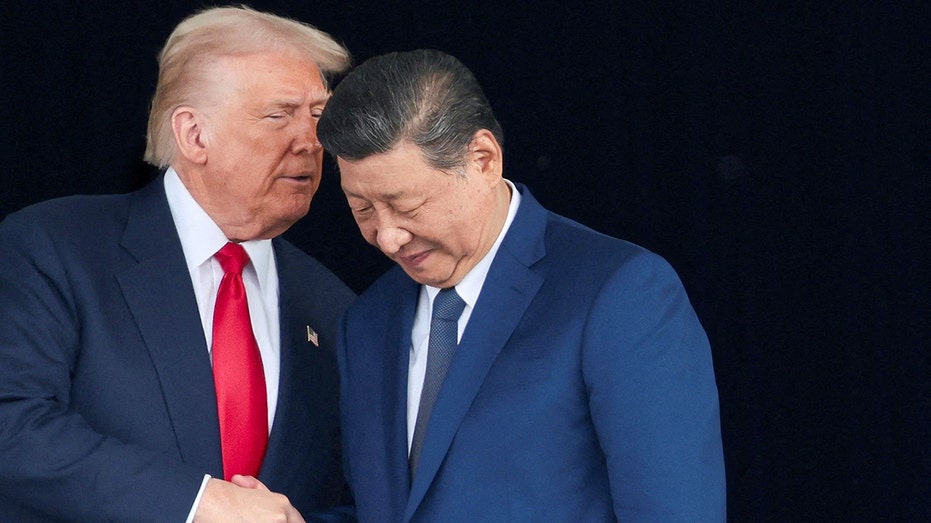
President Donald Trump and Chinese President Xi Jinping talk after a bilateral meeting at Gimhae International Airport, on the sidelines of the Asia-Pacific Economic Cooperation (APEC) Summit, in Busan, South Korea, October 30, 2025. (REUTERS/Evelyn Hockstein / Reuters Photos)
In return, the US agreed to:
- Reduce tariffs on Chinese imports – originally imposed to curb fentanyl flows – by 10 percentage points from November 10, while higher reciprocal tariffs remain suspended until November 10, 2026.
- Extend certain Section 301 rate exclusions through November 10, 2026.
- Delay enforcement of a new export rule targeting subsidiaries of blacklisted Chinese companies until November 10, 2026.
- Suspend new trade actions related to investigations into China’s shipbuilding and logistics sectors until the end of 2026, while continuing coordination with South Korea and Japan to strengthen U.S. shipbuilding.
GOLDMAN SACHS CEO CALLS DECADES OF US-CHINA TRADE POLICY A ‘MISTAKE’, SEES PROGRESS IN TRUMP-XI TALKS
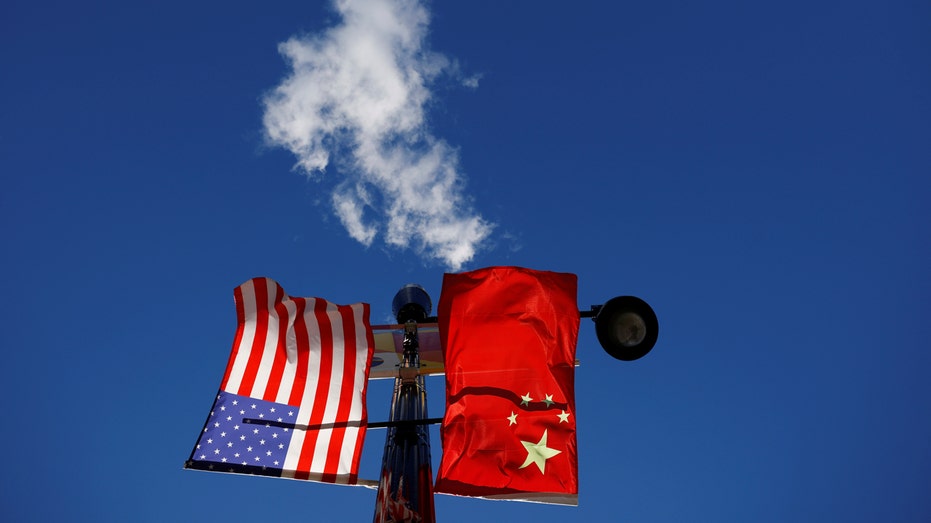
The flags of the United States and China fly from a lamppost in the Chinatown neighborhood of Boston, Massachusetts, on November 1, 2021. (REUTERS/Brian Snyder/File Photo / Reuters Photos)
The White House hailed the deal as the latest in a series of “historic victories for the American people” during Trump’s Asia trip. The visit also resulted in new trade agreements with Malaysia and Cambodia and created a framework for negotiations with Thailand and Vietnam.
In addition, the trip secured extensive investment commitments from both Japan and South Korea.
GET FOX BUSINESS ON THE GO BY CLICKING HERE
“This trade and economic deal concludes President Trump’s successful trip to Asia, where he delivered a series of historic victories for the American people,” the White House wrote.
