



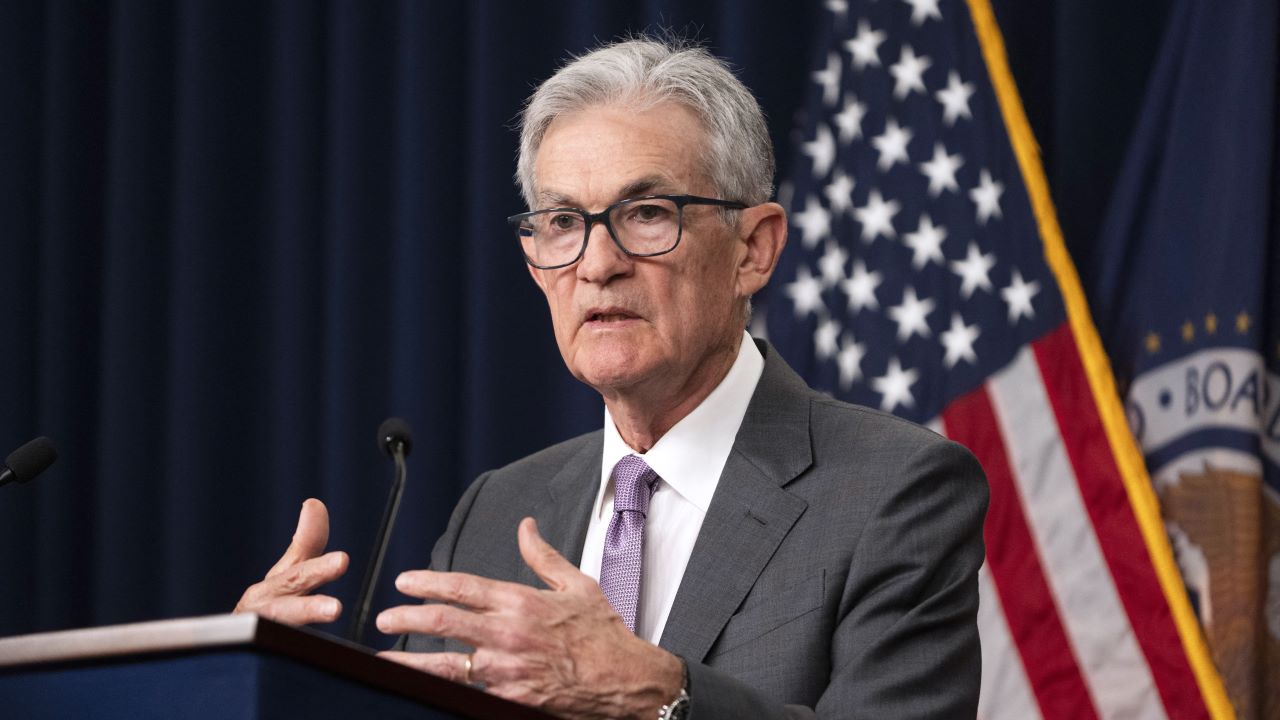
Jerome Powell makes comments after announcing the Fed’s decision on interest rates.
The Federal Reserve announced the second interest rate cut of the year on Wednesday, as policymakers took measures to support the labor market despite inflation remaining above the central bank’s target.
Fed policymakers have voted to cut the Fed Funds rate by 25 basis points to a new range of 3.75% to 4%. This move follows a rate cut of that magnitude in September, the first cut this year.
Policymakers have been monitoring economic data, which has seen a slowdown in the labor market in recent months as companies grapple with changes in trade and immigration. Meanwhile, inflation is trending upward as tariff-related price increases filter into government data.
These trends have put the Fed in a bind as it seeks to achieve its twin mandate goals of stable prices in line with its long-term 2% inflation target and promoting maximum employment.
The Federal Open Market Committee (FOMC), which guides the central bank’s monetary policy moves, noted in its announcement that there are risks to both sides of the dual mandate as job growth has slowed this year, with the unemployment rate moving higher but remaining relatively low, while inflation has increased and remains high.
The FOMC vote in favor of the rate cut was 10-2. Fed Governor Stephen Miran disagreed with a larger cut of 50 basis points, while Kansas City Fed President Jeffrey Schmid opposed a rate cut at the meeting.
Fed Chairman Jerome Powell said at the news conference after the announcement that policymakers remain focused on the dual mandate, noting that while the government shutdown has delayed some key economic data from federal agencies, available public and private data “indicate that the outlook for employment and inflation has not changed much since our meeting in September.”
“While official employment data for September has been delayed, available evidence suggests that both layoffs and hiring remain low, and both household perceptions of job availability and firms’ perceptions of hiring difficulties continue to decline,” Powell said.
“Inflation for goods has increased. In contrast, disinflation for the services sector appears to be continuing. Short-term measures of inflation expectations have increased on balance over the course of this year on news about rates, as reflected in both market and survey-based measures,” Powell said, noting that longer-term expectations remain consistent with the 2% inflation target.
“We remain committed to supporting maximum employment, sustainably returning our inflation rate to our 2% target and keeping longer-term expectations firmly anchored,” Powell explained. “Our success in achieving these goals matters to all Americans. We understand that our actions impact communities, families and businesses across the country. Everything we do is in service of our public mission.”
This is a development story. Check back later for updates.
