



The sleek 102-story tower at 432 Park Ave., located on a stretch of ultra-luxury residential skyscrapers known as Manhattan’s Billionaires’ Row, is experiencing facade problems, according to a recent report.
The facade of 432 Park Ave. — one of the tallest residential buildings in the Western Hemisphere, is visibly damaged with hundreds of cracks, indicating the structure is struggling to withstand wind and rain, according to independent engineering experts, construction reports and court documents obtained by The New York Times. The engineers warned that if the problems are not addressed, the building could ultimately become uninhabitable or pose safety risks to pedestrians below, the report said. These solutions could come at a high cost, with engineers estimating it could be in the ballpark of nine figures, the Times reported.
Thousands of pages of court documents, public records and private correspondence between the buildings’ residents and planners, reviewed by the Times, showed that members of the buildings’ team of developers, engineers and architects had concerns about the concrete even before they broke ground on construction. The problems have led to lawsuits from members of the building’s condo board.
NEARLY 1 IN 5 US HOMES REDUCING PRICES AS BUYERS GET THE UPPER IN CHANGING MARKET
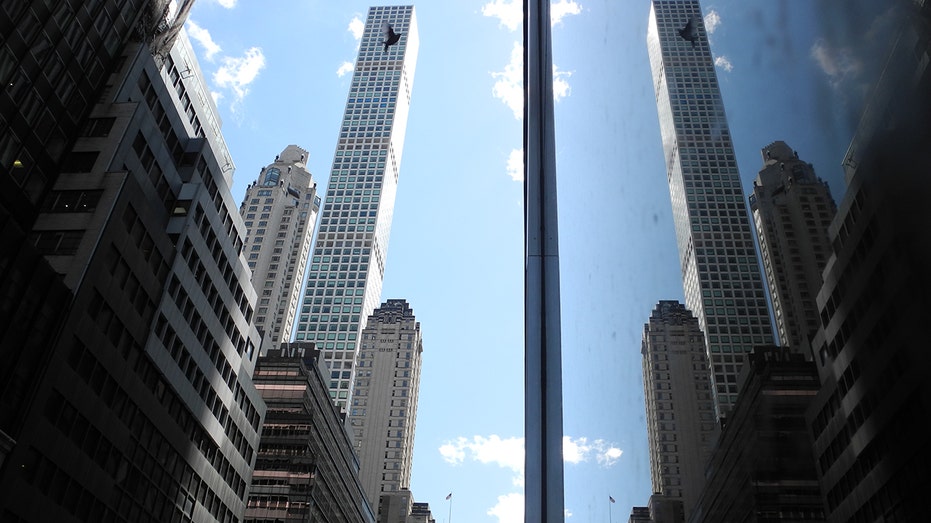
The skyscraper 432 Park Ave. is reflected in a glass facade. (Benno Schwinghammer/Picture Alliance via Getty Images)
The building was designed by Rafael Viñoly and rises 400 meters above Park Ave. between 56th and 57th Streets. It is described as an extraordinary creative collaboration that “combines Palladian proportioned rooms with the highest engineering technology, honest materials and versatile planning,” according to the website.
The New York City Department of Buildings said buildings in the city that are more than six stories tall are subject to the requirements of the department’s Facade Inspection & Safety Program, commonly called Local Law 11. This law requires building owners to hire a qualified exterior wall inspector (QEWI) and have the facade of their building inspected at least once every five years. These inspection reports must be filed with the Buildings Department and made public.
FROM AMERICA’S ‘WORST MARKET’ TO WEALTH: FLORIDA REAL ESTATE SPLIT SHOWS SIGNS OF LIFE
The most recent facade inspection, filed on April 15, 2025, found that the exterior walls of 432 Park Ave. “be safe with a repair and maintenance program” (SWARMP). This means that the wall or parts of the wall of 432 Park Ave. were safe at the time of inspection, but will require repairs or maintenance within the next five years to prevent them from becoming unsafe.
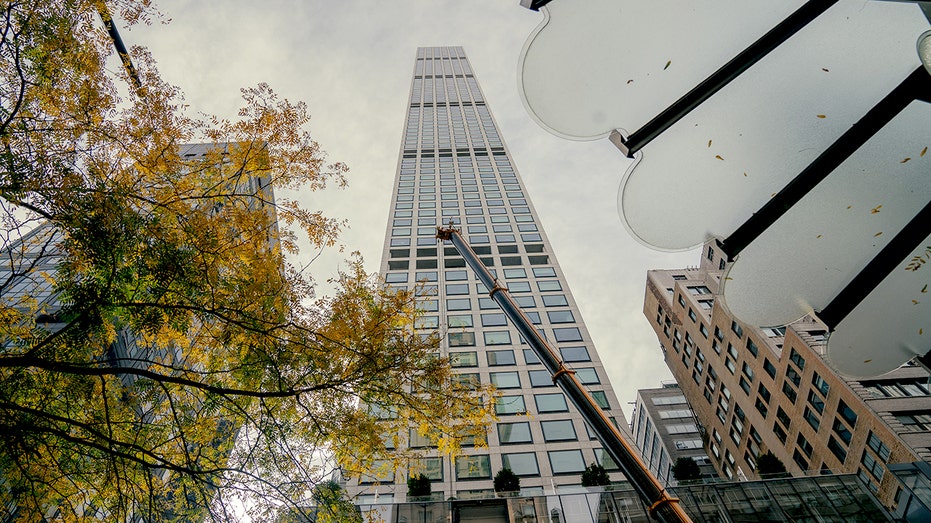
The residential skyscraper 432 Park Ave. in New York’s Midtown neighborhood on November 14, 2021. (Amir Hamja/Bloomberg via Getty Images)
The department said the building owners made subsequent repairs to correct these unsafe conditions. In February 2023, a new report was submitted showing that the facade of the building was in SWAMP condition.
REAL ESTATE VETERAN WARNS ‘HOPELESSNESS’ IN THE HOUSING MARKET THREATENS THE AMERICAN DREAM
Yet the condo board of 432 Park Ave. filed two separate lawsuits accusing the building’s developers of selling them defective units and fraudulently covering up the problems, the Times reported.
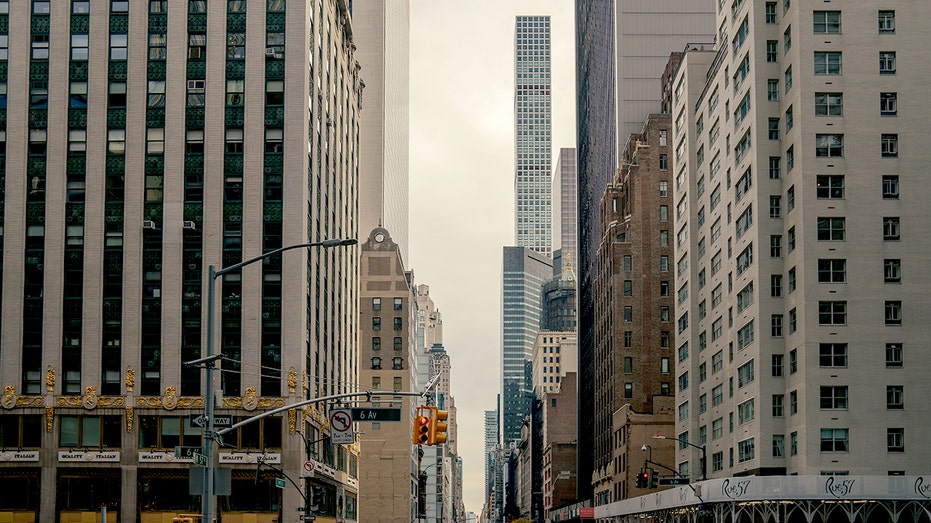
The residential skyscraper 432 Park Ave., center, in New York’s Midtown neighborhood. (Amir Hamja/Bloomberg via Getty Images)
The spokesperson also noted that the design team, sponsor, contractors “and each of their respective experts disagree with the board’s baseless allegations and reaffirm that this should be resolved in court and not in the press.”
GET FOX BUSINESS ON THE GO BY CLICKING HERE
The building further alleged that the board “failed to follow the recommended facade maintenance program,” which requires the reapplication of a protective sealer to extend the associated warranty.
“Contrary to the hyperbolic allegations, the board has spent less than $300,000 on facade repairs over five years, while also spending more than $20 million on legal fees and consultants,” the spokesperson said, adding that “claims that the sponsor ignored the risks are categorically untrue and defamatory, and yet another misstep by the board that will reduce property values and will harm apartment owners.”
